Zamakan:
Towards a contrapuntal image
Katrine Dirckinck-Holmfeld, Amr Hatem & Abbas Mroueh, 2021
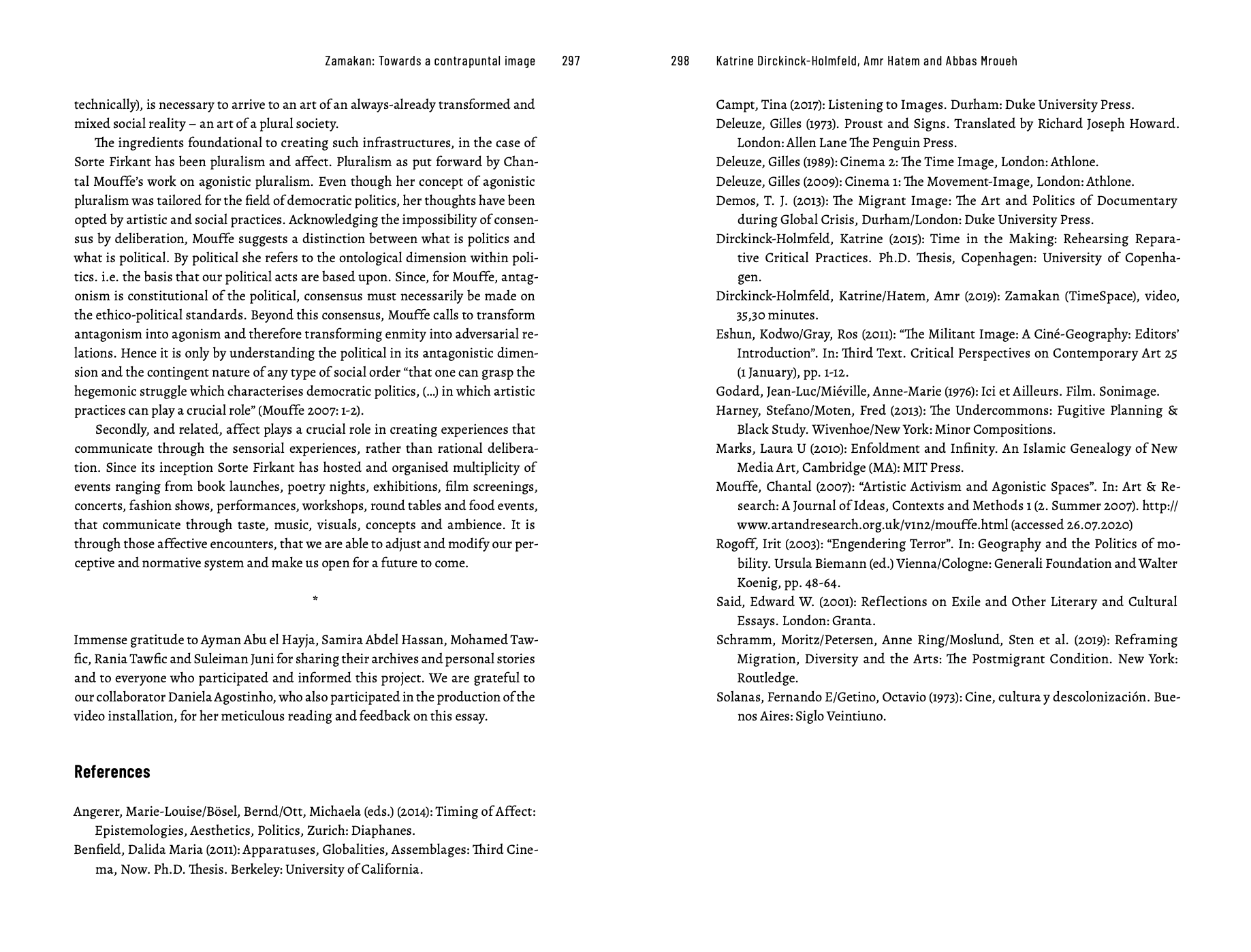
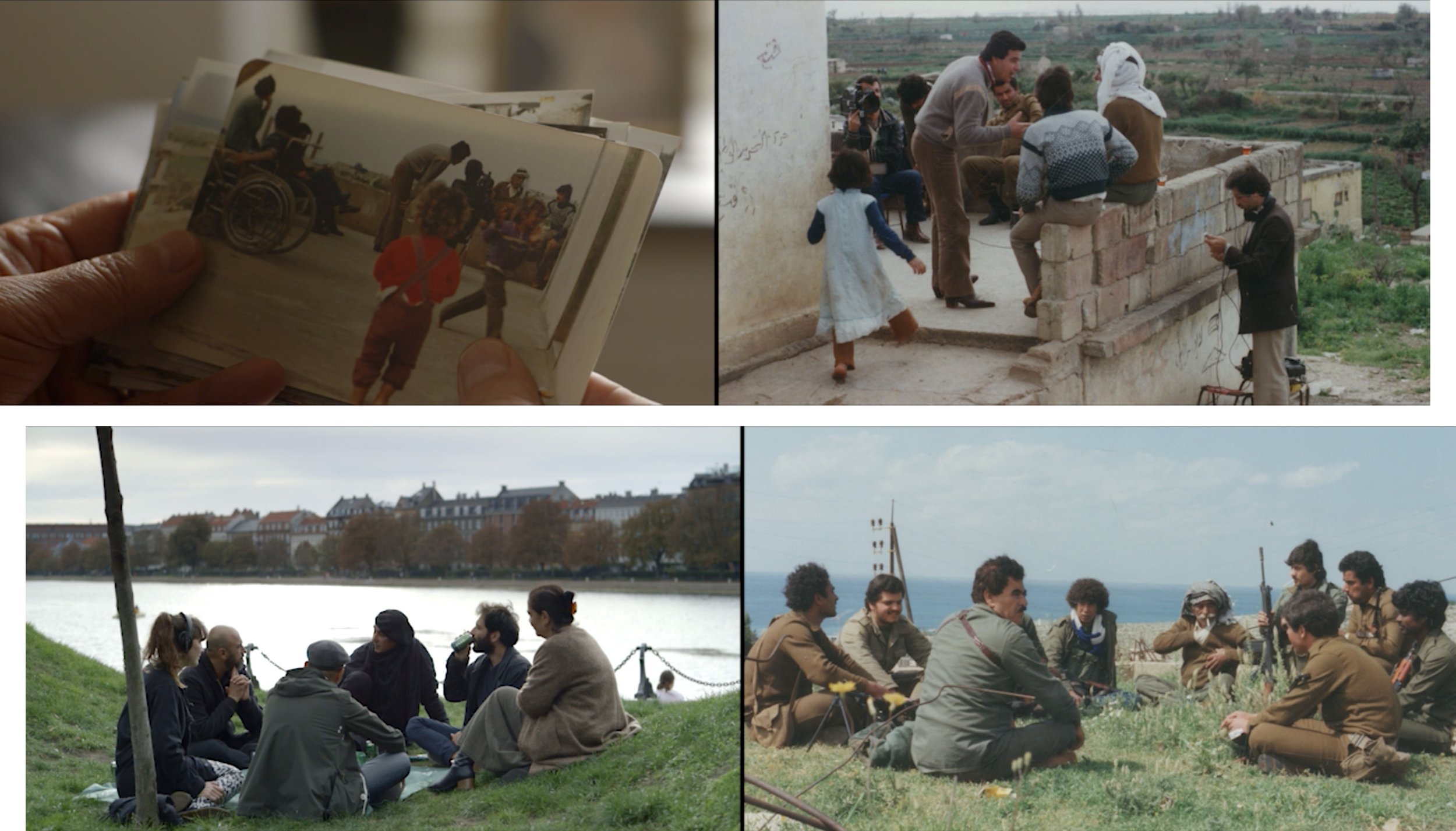
1981: Mohamad Tawfic shoots the film Yaumyeat Mukatel (The Everyday Life of a Fighter) about the Palestinian Fedayeen in South Lebanon.
1982: Israel invades Lebanon. Tawfic is stuck in Damascus, while his daughter, wife and the unfinished film are besieged in Beirut. In a daydream, Tawfic sees the film spools flying through the air and landing in a dumpster.
2018: Tawfic’s apartment in Birkerød (a suburb of Copenhagen, Denmark).
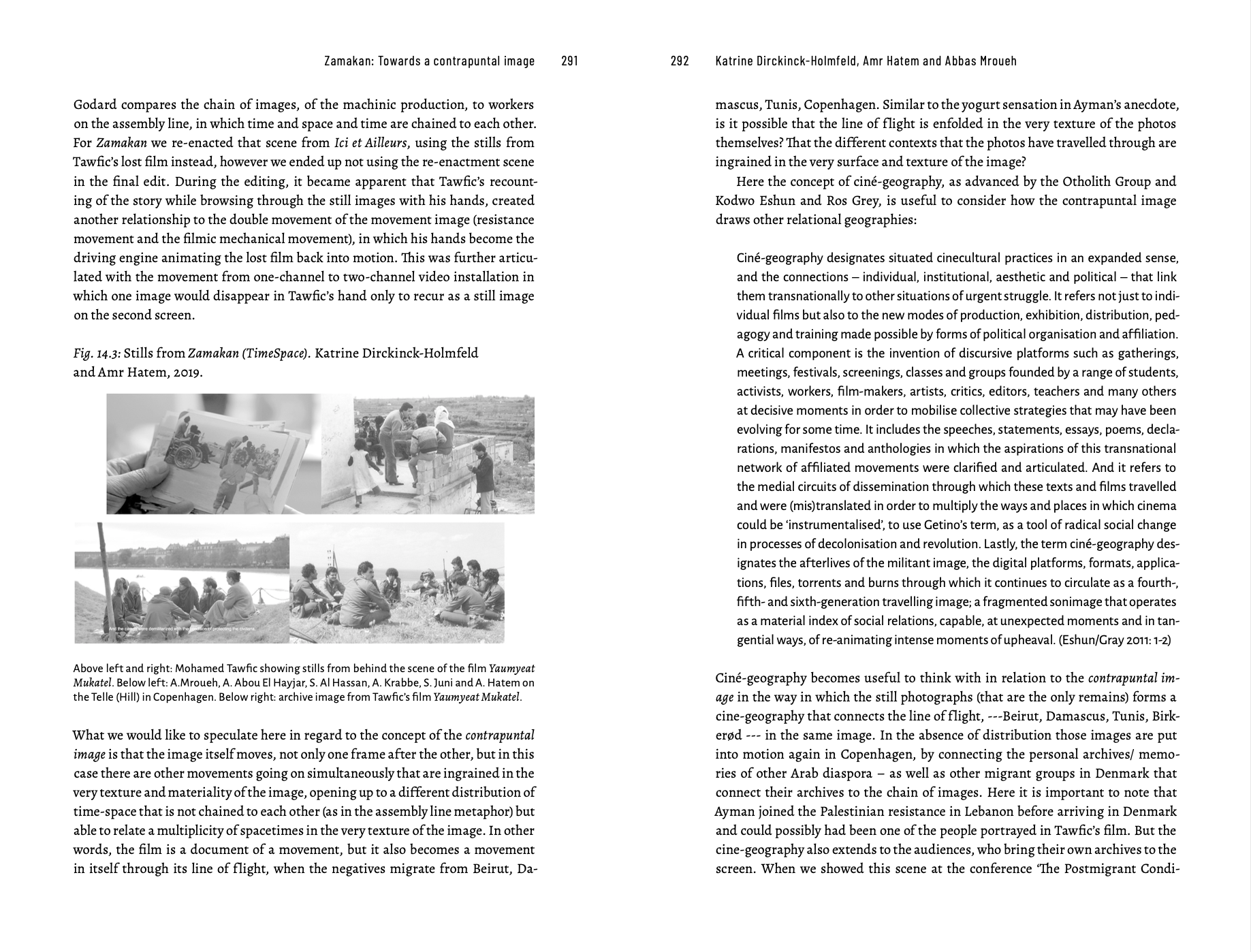
He shows us the only remains from the film. The behind-the-scenes photos.
1996: The behind-the-scenes photos were developed in Birkerød where the family arrives, af ter Damascus, Tunis...
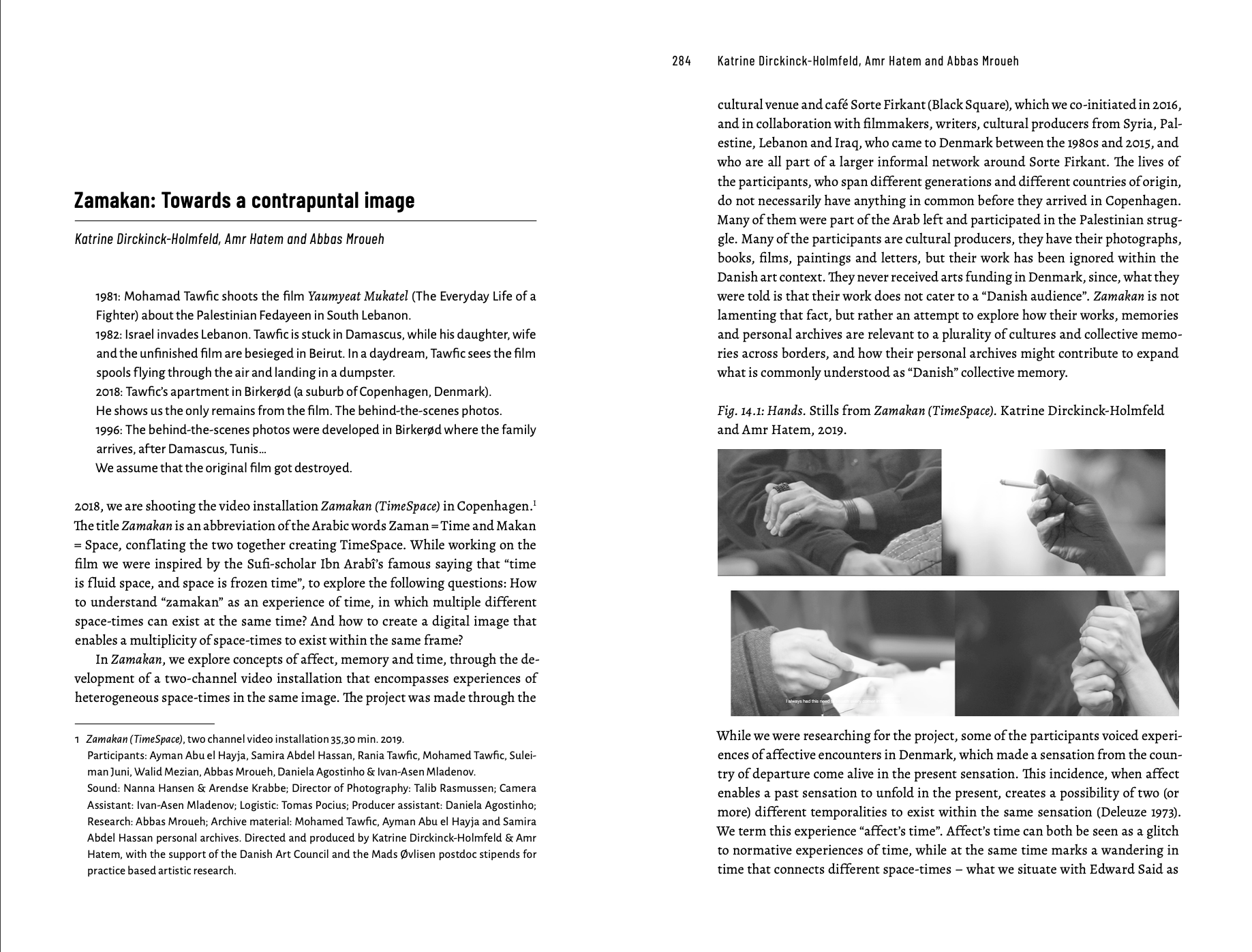
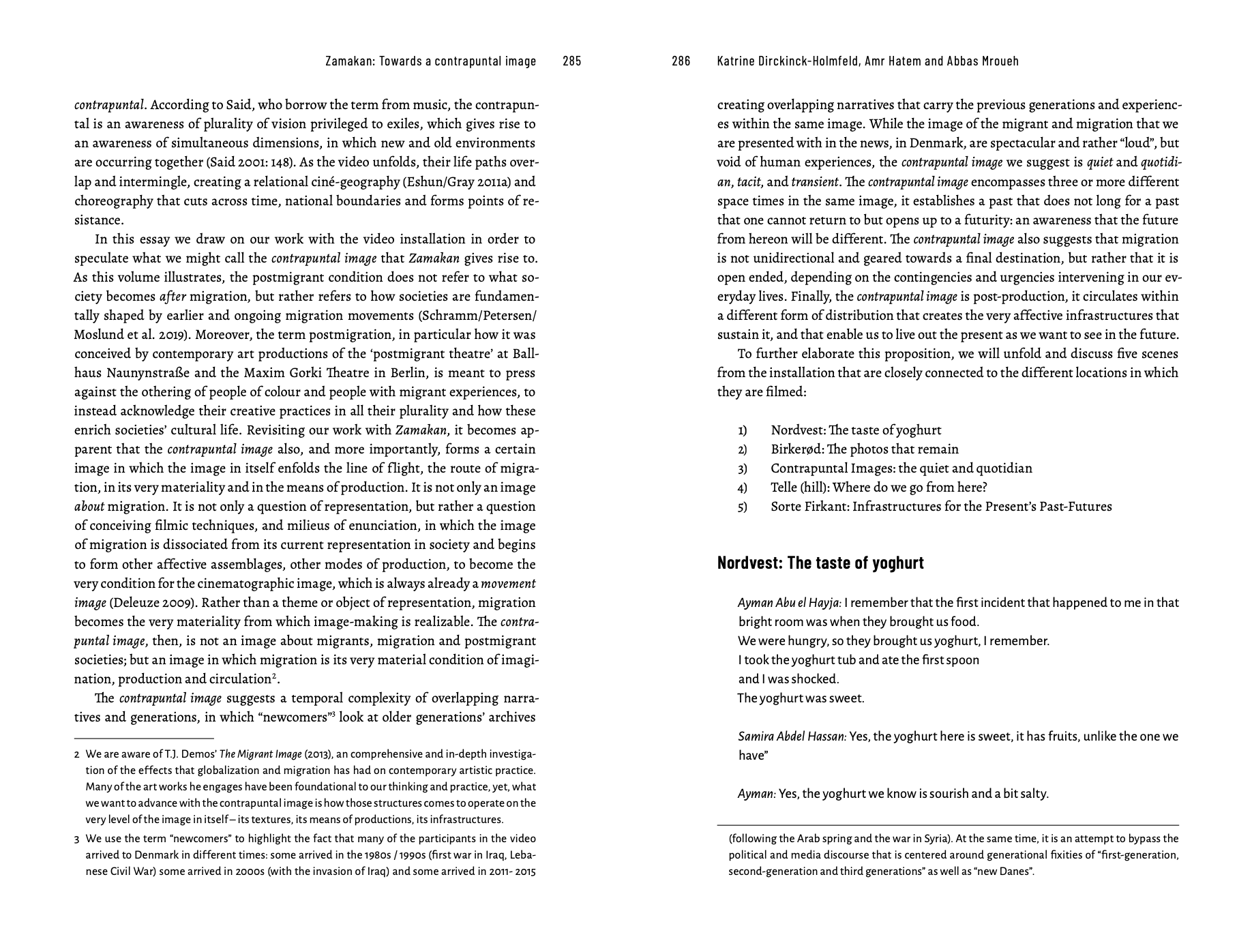
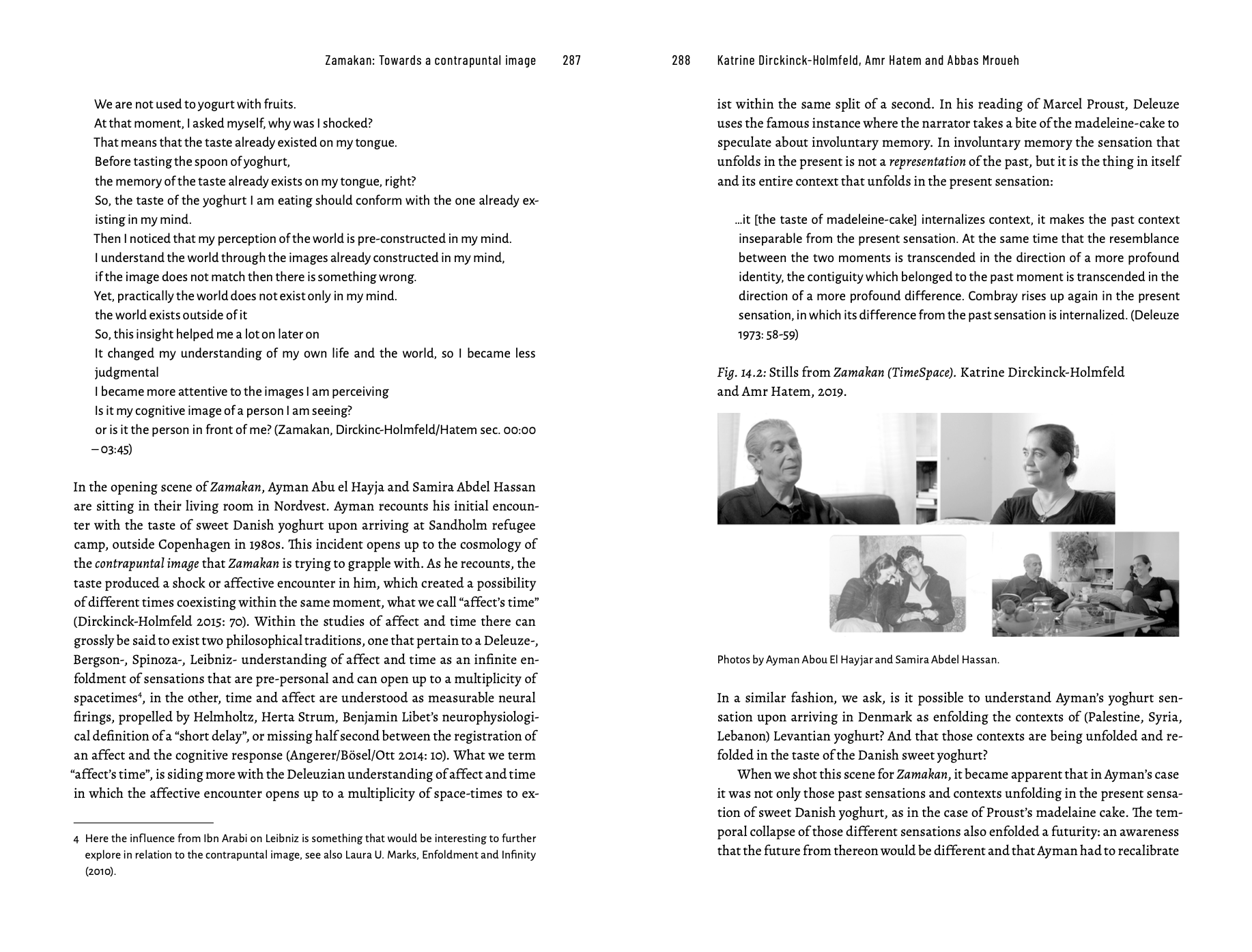
In this essay we draw on our work with the video installation Zamakan in order to speculate what we might call the contrapuntal image that the video installation gives rise to. Drawing on the work of Edward Said, we suggest that the contrapuntal image has a temporal complexity of overlapping narratives and generations, in which “newcomers” look at older generations’ archives creating overlapping narratives that carry the previous generations and experiences within the same image. While the image of the migrant and migration that we are presented with in the news, in Denmark, are spectacular and rather “loud”, but void of human experiences, the contrapuntal image we suggest is quiet and quotidian, tacit, and transient. The contrapuntal image encompasses three or more different space times in the same image, it establishes a past that does not long for a past that one cannot return to but opens up to a futurity: an awareness that the future from hereon will be different. The contrapuntal image also suggests that migration is not unidirectional and geared towards a final destination, but rather that it is open ended, depending on the contingencies and urgencies intervening in our everyday lives. Finally, the contrapuntal image is post-production, it circulates within a different form of distribution that creates the very affective infrastructures that sustain it, and that enable us to live out the present as we want to see in the future.
The essay was published in Post/Migration volume edited by Anna Meera Gaonkar, Astrid Sophie Øst Hansen, Hans Christian Post, Moritz Schramm. You can read the essay below or access the entire book here
https://www.academia.edu/45440424/Zamakan_Towards_a_contrapuntal_image